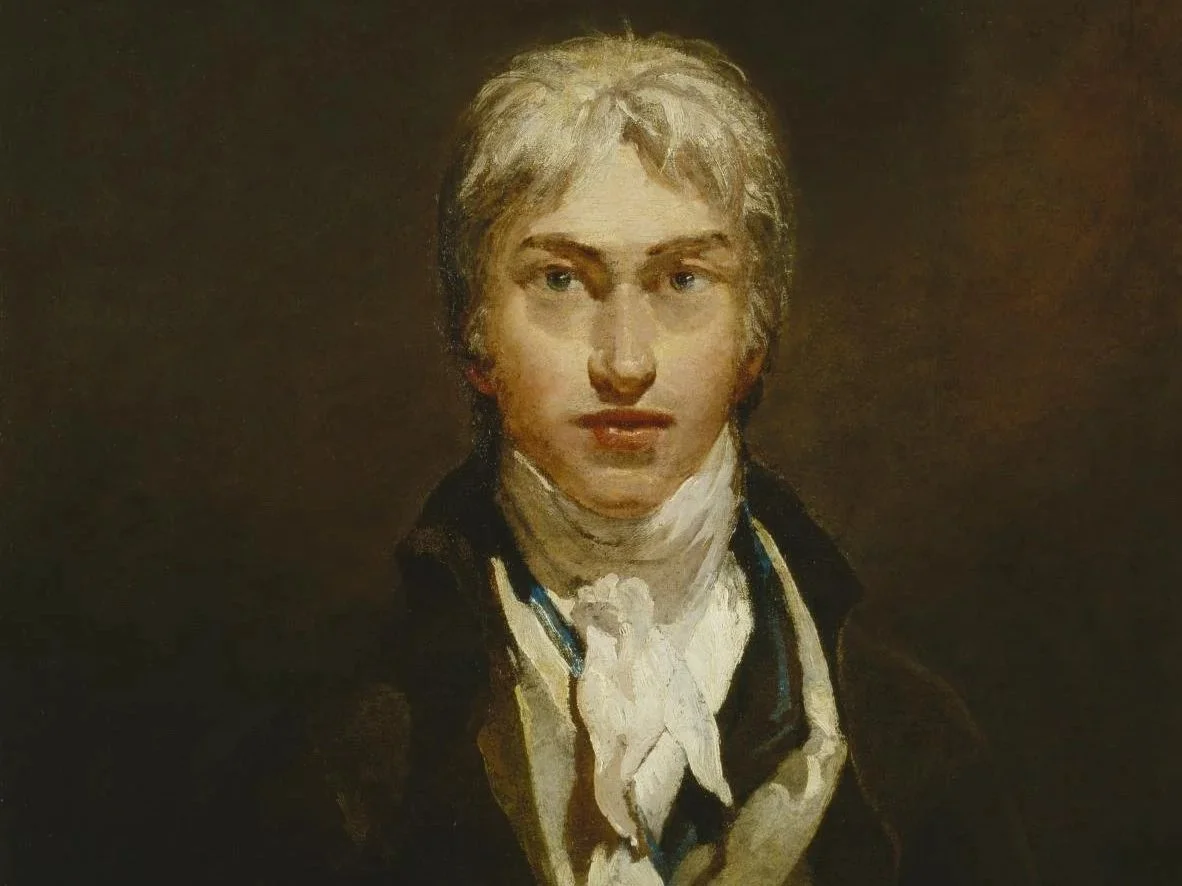
J.M.W. Turner RA (1775–1851) was one of Britain's most influential painters, celebrated for his revolutionary treatment of light and atmosphere.
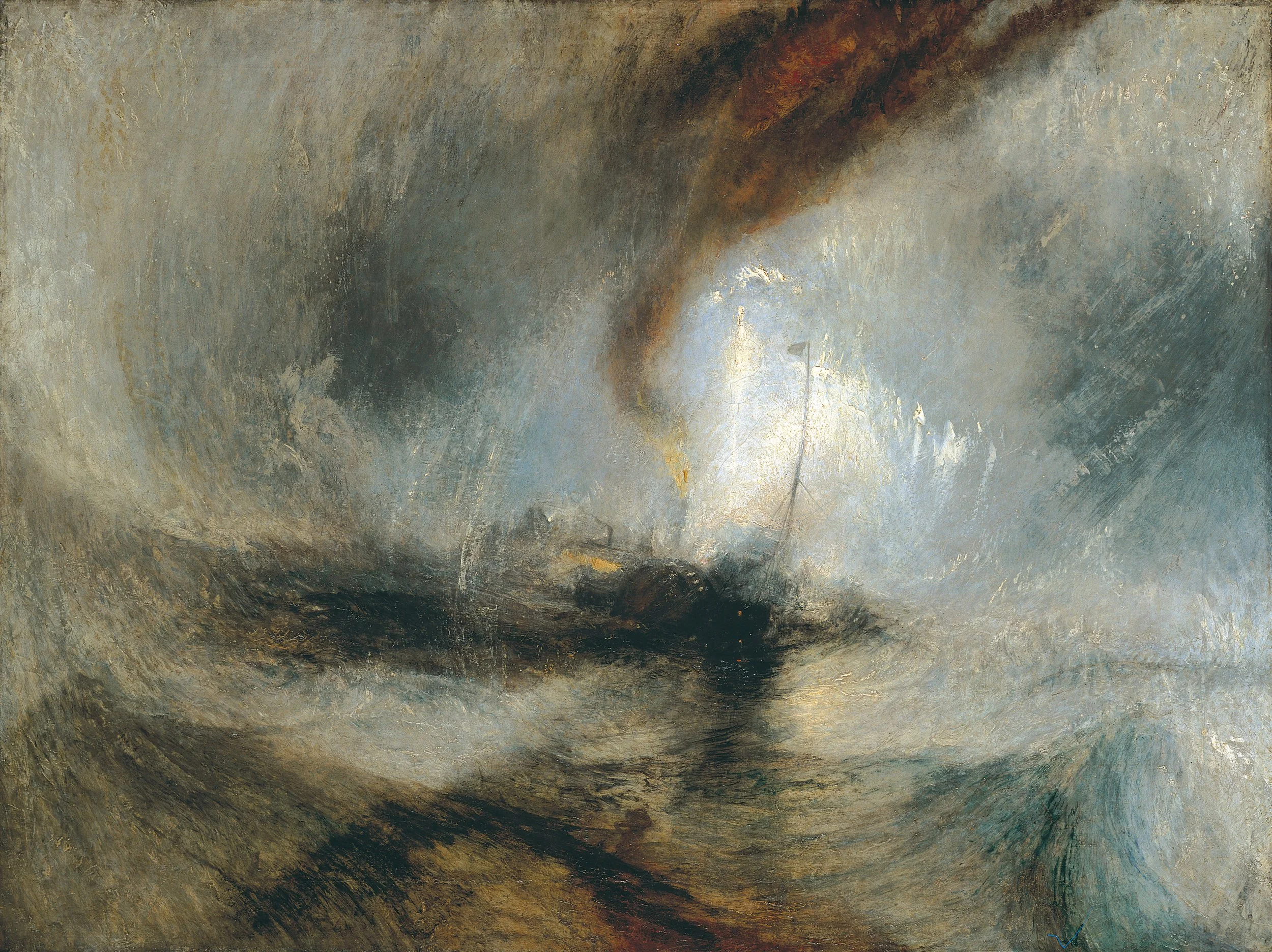
My relationship with Turner began before I could fully understand what I was seeing. When I was about six, my parents had placemats with Turner paintings on them. I chose this one for my room—Snow Storm: Steam-Boat off a Harbour's Mouth. I can remember thinking: this is the best thing I've ever seen in my life, better than television! As an 80s kid without much to play with, I'd copy this image over and over again, imagining I was on that ship, wondering what it must have felt like. But I was also amazed by the fact that this was a painting.
In those early years, Mum took me to London often to see Turners in person, and with each visit, I understood more about what he was doing. Turner was massively pushing the boundaries of what was considered acceptable art of his time. Believe it or not, he was the Tracey Emin of his day—controversial, misunderstood, unwilling to compromise his vision for public approval.
Turner later recounted the story behind Snow Storm: "I did not paint it to be understood, but I wished to show what such a scene was like. I got the sailors to lash me to the mast to observe it; I was lashed for four hours, and I did not expect to escape, but I felt bound to record it if I did."
That commitment—to experience, to truth, to capturing the essence of a moment rather than its prettified version—that's what Turner taught me first.
MY FAVOURITE PIECE
Snow Storm: Steam-Boat off a Harbour's Mouth (1842)
Oil on canvas, 91 × 122 cm (36 × 48 in)
Tate, London