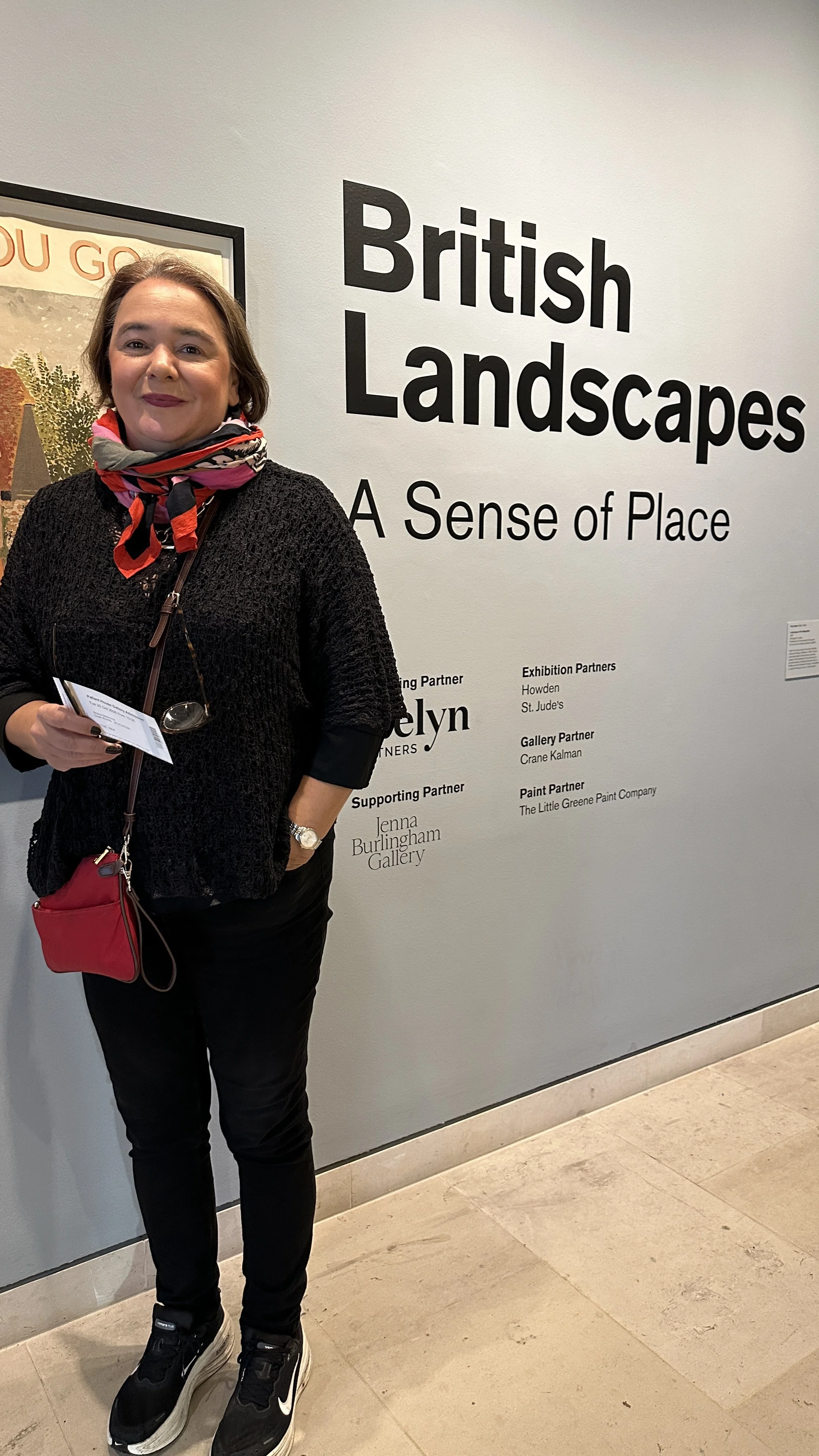
I was extremely pleased to see British Landscapes: A Sense of Place at Pallant House Gallery. It's such an important exhibition for me, because it has so many of my heroes in it.
Paul Nash, of course, alongside Graham Sutherland, Wilhelmina Barns-Graham, Ivon Hitchens, Terry Frost and Norman Ackroyd. These artists, Nash above all, were a huge influence on my work at art school, first on my diploma at Reigate and then on my degree.
A clear line from Gainsborough onwards
What is really brilliant about this show is how clearly it maps out the progression. It starts at the very beginning of landscape and place, with Romantic artists like Gainsborough, and carries you through to Paul Nash and beyond. The leaps those artists achieved in that time were phenomenal, and really inspiring to see in the flesh.
Nash and Sutherland were doing things with mediums and marks that were totally revolutionary in fine art. They were pushing the boundaries, even then, of what we perceive as art and how we perceive painting and drawing. Their approaches to their subjects were groundbreaking for the time.
From those early Nashes, you can follow the line round to Terry Frost and Ivon Hitchens. It's a lovely progression.
Watching the materials change
When you actually see the colours and tools these artists were using, you notice something else. In the 1930s they were quite restricted by the mediums available to them. As the years go on, into the 1960s and then the 1970s, you can see their brushes getting bigger and the oil paints becoming more extended.
The paint itself is changing, and the artists are responding to those changes within their preferred subject matter. Marks and materials have always moved together.
Why it matters for painters now
The main thing I want to add is this. The painters of our time couldn't do what they do without the artists, and the artistry, that came before them.
Ivon Hitchens, Peter Lanyon, Prunella Clough and Terry Frost had a massive influence on the painters who came through in the 1980s and 1990s: Callum Innes, Ian Davenport, Jason Martin. You can trace that same inheritance through Howard Hodgkin and Jenny Saville.
For me, the exhibition shows the importance of those beginnings. Our British painters of that era helped, developed and enabled the contemporary artists of our time.
It's a beautiful, clever exhibition, with a really clear, succinct mapping of how contemporary landscape painting developed, from the early 1920s right through to the painters of the 1990s. If you paint, or simply love landscape, go and see these works in the flesh.
British Landscapes: A Sense of Place is at Pallant House Gallery, Chichester, until 1 November 2026.
If you'd like to see how that lineage runs through my own landscape and coastal work, I'd love to welcome you to my studio. Get in touch to arrange a visit.