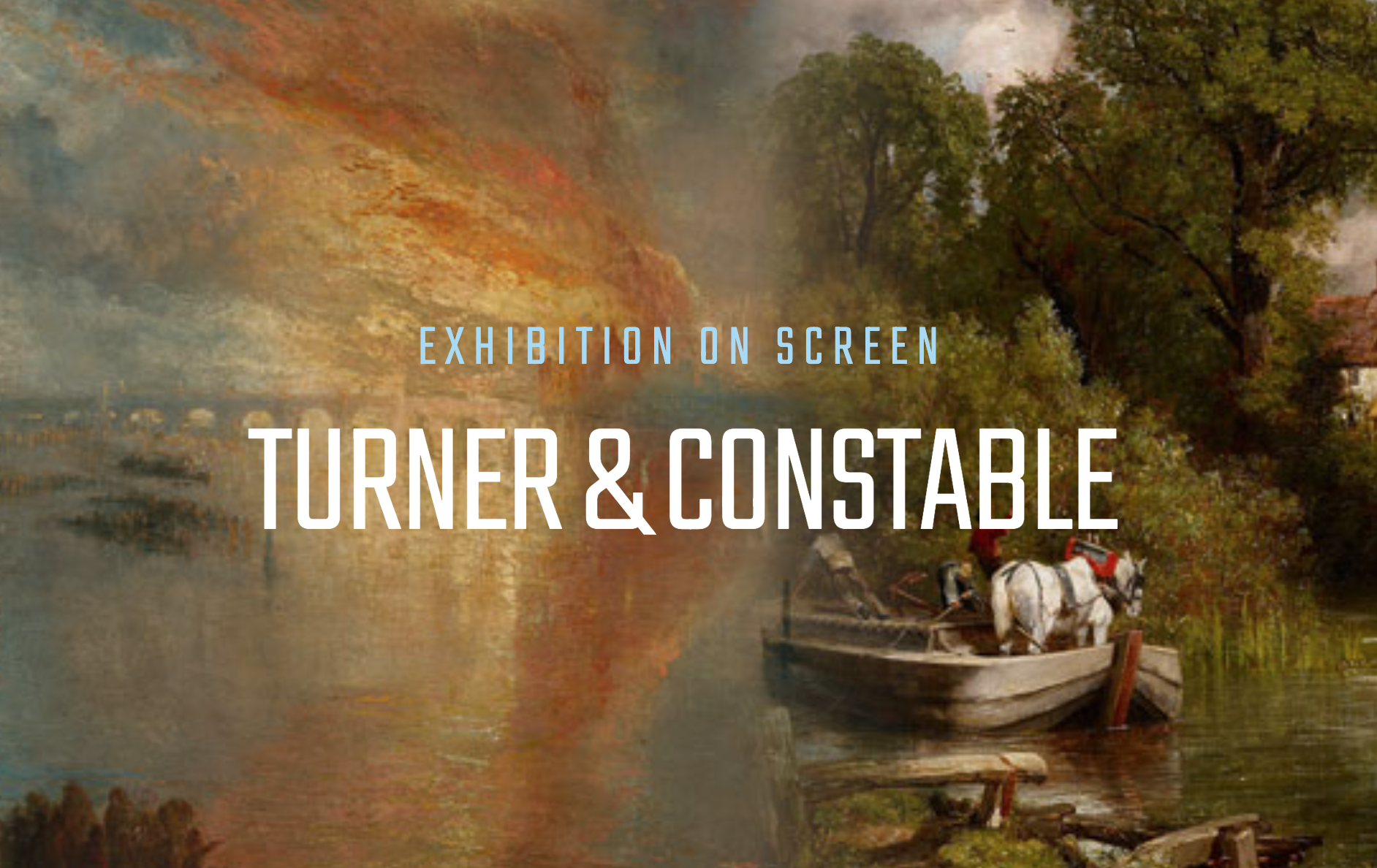
I've always known Turner was important to my practice. But watching the Exhibition on Screen documentary about the current Turner & Constable exhibition at Tate Britain, I felt something I wasn't quite expecting: affirmation.
The exhibition marks the 250th anniversary of both artists' births, and it brings their work together side by side, as it so often was in their lifetimes. Critics of the day described the contrast as "fire and water." But what struck me most wasn't the rivalry. It was the radicalism.
Turner and Constable were the contemporary artists of their time. They were doing something completely unique with paint, pushing at the boundaries of what landscape could be. They were, if you like, the Tracy Emin of their era. That's easy to forget when we see their work through the lens of heritage and tradition, but in their day, this was the cutting edge.
Presenting a Feeling, Not a Picture
What really interests me is what happened in Turner's later work. Towards the end of his life, he stopped trying to depict a scene and started asking a different question: how does this scene make you feel? He realised that paint could penetrate to the viewer. That you could present a feeling. So he began working with tonal range, from light to dark, to create atmosphere, drama, light. The viewer was experiencing the painting rather than simply looking at a particular scene. And that shift is everything.
Constable's contribution runs in a different direction but feeds the same lineage. His work travelled to France and helped push French Impressionism forward. Without that cross-pollination, you arguably wouldn't have had abstract expressionism. So all these movements, from the late 18th and early 19th centuries through to contemporary painting today, have Turner and Constable at the very beginnings. I'd sensed this for years, but the film affirmed it. I remember studying Turner's sketchbooks and realising how abstract they were. He was desperately trying to create drama and feeling, experimenting right up until the end. In 1844, he was still trying new things. That restlessness is something I recognise.
Brushstrokes on the Big Screen
Seeing the documentary on the big screen added another dimension entirely. You could see the actual brushstrokes, the layering, how they were thinking. Both Turner and Constable were using brushes almost as thin as a hair: horsehair, hog hair, whatever was available. Seeing those gestures of paint magnified on a cinema screen was extraordinary. As an artist, it was incredibly helpful to study that gestural, painterly work at that scale.
And ultimately, this is where I stand with contemporary British landscape painting. For me, it's about how a painting makes you feel. What can paint do to make you experience something, rather than just look at a picture? That question, which Turner was asking over 200 years ago, is still the question I'm asking every time I step into the studio.
The Turner & Constable exhibition is at Tate Britain until 12 April. The Exhibition on Screen documentary, directed by David Bickerstaff, is in cinemas now. Both are well worth your time.